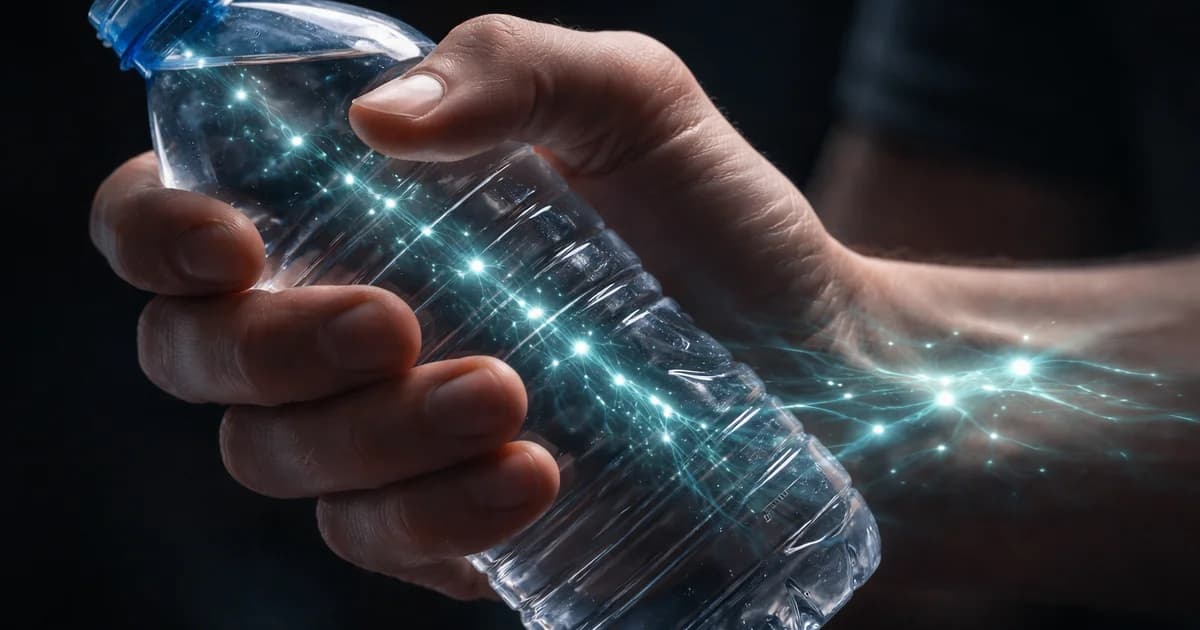
Your blood has 4.2 microplastics per mL: a $0.03 fiber fix

Every time you drink from a plastic bottle, microwave food in a container, or breathe city air, tiny plastic fragments enter your bloodstream. A 2024 study published in Environment International found that 90% of healthy blood donors had detectable microplastics circulating in their veins, with concentrations averaging 4.2 particles per milliliter. That is not a typo: billions of plastic fragments are already inside you.
The plastic flowing through your arteries
Researchers at the University of Hull analyzed blood from 20 healthy volunteers and identified 24 different polymer types, including polyethylene (the stuff in grocery bags), polypropylene (food containers), and ethylene-vinyl acetate. The particles ranged from 7 to 3,000 micrometers in length, and 88% were sharp-edged fragments rather than smooth spheres.
What makes this more than an abstract concern is what happens when these particles accumulate in your cardiovascular system. A landmark 2024 study in the New England Journal of Medicine examined carotid artery plaque from surgery patients and found microplastics embedded in 58.4% of samples. Patients whose plaque contained plastic particles had a significantly higher risk of heart attack, stroke, or death over the following 34 months compared to those with plastic-free plaque.
Your body treats these fragments as invaders. They trigger oxidative stress and chronic inflammation in blood vessel walls, the same processes that drive atherosclerosis, clot formation, and organ damage over time. The problem is not just that microplastics are present: they are actively contributing to cardiovascular disease.
Why your gut is the front line
Here is where it gets actionable. Most microplastics enter your body through your digestive system, hitching rides on food, water, and even table salt. Your gut is the primary gateway, and it turns out that what you eat alongside those plastics dramatically affects how many stay inside you.
A 2025 study published in Scientific Reports tested whether non-digestible dietary fibers could accelerate microplastic excretion in animal models. The results were striking: the chitosan group (a fiber derived from shellfish) excreted microplastics at a rate of 115.6%, compared to 83.7% in the control group. Within the first 24 hours alone, the fiber group eliminated 39.6% of ingested microplastics versus just 14.8% in controls. Intestinal retention dropped from 12.1% to 6.1%.
Chitosan works by binding to plastic particles in the gastrointestinal tract, essentially trapping them before they can cross the gut barrier into your bloodstream. Think of it as a molecular net that catches plastic fragments and carries them out.
The probiotic accelerator
Fiber is not the only biological tool available. Researchers at Bluepha in Shanghai screened 784 bacterial strains and identified two probiotics, Lacticaseibacillus paracasei DT66 and Lactiplantibacillus plantarum DT88, that physically adsorb microplastics onto their cell surfaces. In mouse models, these strains increased microplastic excretion by 34% and reduced intestinal particle retention by 67%.
Even more promising: the probiotic DT88 also reduced inflammatory markers triggered by microplastic exposure. So the same intervention that helps flush plastics out also calms the immune response those plastics provoke.
What this means for your grocery list
You do not need expensive supplements or exotic protocols. The science points to two accessible strategies that work through complementary mechanisms.
First, increase your intake of non-digestible fiber. Chitosan supplements typically cost around $0.03 per capsule, but you can also boost fiber intake through foods your gut bacteria already depend on: beans, lentils, oats, and cruciferous vegetables. These fibers physically bind plastic particles and accelerate their transit through your digestive system.
Second, consider fermented foods or targeted probiotics. Lactobacillus strains (available in most yogurts and kefir) belong to the same family as the high-performing strains in the Shanghai study. While those specific strains are not yet commercially available, the broader family shows consistent ability to interact with and escort contaminants out of the gut.
The uncomfortable math
With an average of 4.2 microplastics per milliliter of blood and roughly 5 liters of blood in the human body, you are carrying approximately 21 billion plastic particles right now. Zero elimination is not realistic in a world wrapped in plastic. But reducing your body's plastic burden by even a fraction, through a strategy that costs pennies and takes no extra time, shifts the math meaningfully in your favor.
The question is not whether microplastics are inside you. The science settled that. The question is whether you will keep feeding the accumulation or start flushing it.
Related Reading:
Sources and References
- Environment International (University of Hull) — 90% of healthy blood donors had detectable microplastics, with 24 different polymer types identified including polyethylene (32%), EPDM (14%), and EVA/EVOH (12%).
- New England Journal of Medicine — Microplastics were found embedded in 58.4% of carotid artery plaque samples. Patients with plastic-containing plaque had significantly higher risk of heart attack, stroke, or death over 34 months of follow-up.
- Scientific Reports (Nature) — Chitosan fiber increased microplastic excretion to 115.6% vs 83.7% in controls (38% improvement). Within 24 hours, fiber group eliminated 39.6% of ingested microplastics vs 14.8% in controls. Intestinal retention dropped from 12.1% to 6.1%.
- Frontiers in Microbiology (Bluepha/Shanghai) — Two probiotic strains increased microplastic excretion by 34% and reduced intestinal particle retention by 67% in mouse models. L. plantarum DT88 also reduced inflammatory markers from microplastic exposure.
Read about our editorial standards →