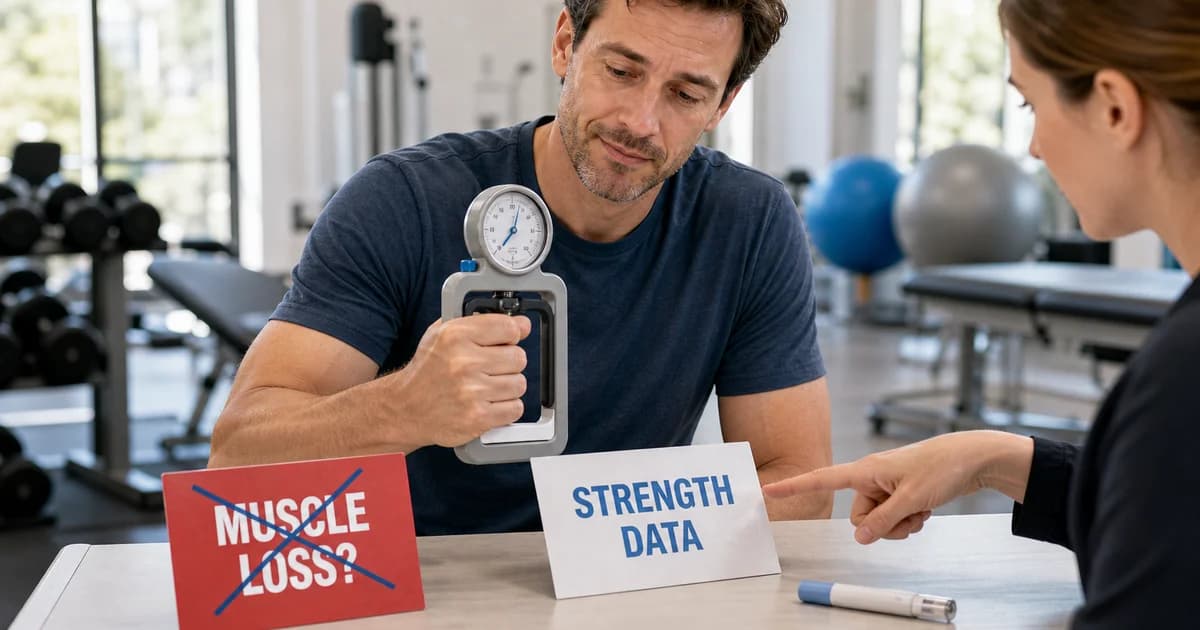
GLP-1 Muscle Loss Panic Ignores the Strength Data

The headlines are relentless: GLP-1 drugs for weight loss are causing dangerous muscle wasting. This narrative has sparked a panic, suggesting that the revolutionary medications for obesity might trade fat for frailty. But a closer look at the emerging data reveals a pattern interrupt: the scare is largely about lean mass percentages, while the more crucial metric: functional strength: is being overlooked. The real question isn't just whether muscle is lost, but whether strength, physical function, and the ability to maintain them through protein and resistance training are preserved. The latest science suggests they are.
Why this matters now
A pivotal 2026 study published in Cell Reports Medicine directly addresses this fear 1. Researchers found that weight loss induced by GLP-1 medicines in both obese mice and humans "did not cause disproportionate loss of muscle mass or function." This is a critical distinction. When anyone loses weight, a portion of that loss will inevitably come from lean tissue, including muscle. The key term here is "disproportionate." The study indicates that the muscle loss observed is commensurate with typical weight loss, not an accelerated, drug-specific erosion. The body is shedding mass in a balanced way.
This finding is echoed in a summary of the new data by Nature, which noted that "strength persisting after substantial weight loss on modern obesity drugs" is the emerging story 2. Strength, measured by grip strength or performance in functional tests, is a far more relevant outcome than lean mass alone. Lean mass can include water, connective tissue, and organ weight. Strength directly correlates with independence, metabolic health, and longevity. The data shift the focus from a simple, scary biomass tally to a practical measure of capability.
Why does the lean-mass panic persist? It taps into a deep-seated loss aversion. The idea of losing hard-earned muscle is viscerally frightening, especially for those engaged in fitness. Furthermore, early reports and anecdotes often lacked this nuanced strength data. The narrative solidified before the full picture arrived. However, authority proof from high-impact journals like Cell Reports Medicine and Nature now provides the counterbalance.
What changes in practice
The conversation must now pivot to preservation. Even if muscle loss is not disproportionate, it still occurs. This is where lifestyle prioritization becomes central, a point strongly argued in a review on PMC 3. As medication-driven weight loss expands, the fundamentals of muscle maintenance: adequate protein intake and consistent resistance training: are not optional; they are essential. The drugs manage appetite and metabolism, but they do not build muscle. That responsibility remains with the individual.
This aligns with a broader principle in practical nutrition and biohacking: interventions are synergistic. A GLP-1 medication can be a powerful tool for reducing adiposity (body fat), but its maximum benefit is realized when paired with behaviors that protect and build lean tissue. Think of it as creating a favorable environment for body recomposition: the drug helps remove the excess fat, while your diet and exercise regimen ensure the underlying structure: your muscle and strength: remains robust or even improves.
For those concerned about muscle loss narrative, the actionable advice is clear and non-medical: prioritize protein. Ensure your daily intake is sufficient to support muscle protein synthesis, especially during calorie restriction. Engage in regular resistance exercise. This doesn't require extreme lifting; consistent, progressive strength training is the signal your body needs to retain muscle. Monitor function, not just weight. How do you feel? Can you perform daily tasks with ease? These are better indicators than a single number from a body composition scan.
It’s also worth remembering that the body’s response to nutrients and supplements during any weight loss phase can be complex. For instance, the rapid supplement absorption and excretion of some compounds highlights the importance of timing and bioavailability, principles that apply to protein and other muscle-supporting nutrients as well.
The GLP-1 muscle-loss panic is a classic case of a partial story generating undue fear. The initial focus on lean mass created a loss aversion feedback loop. Now, the strength data is filling in the gaps, showing that functional capacity can persist. The ultimate message is one of integration, not isolation. Modern medications offer a profound assist in tackling obesity, but the timeless pillars of nutrition and exercise remain the bedrock of preserving the strength and function that make that weight loss meaningful and sustainable. The goal isn't just a lighter body; it's a stronger, more capable one.
Sources and References
- PubMed / Cell Reports Medicine — A 2026 Cell Reports Medicine study reports that GLP-1 medicine weight loss did not cause disproportionate loss of muscle mass or function in obese mice and humans.
- Nature — Nature summarized the new data as strength persisting after substantial weight loss on modern obesity drugs.
- PubMed Central — A review on GLP-1 agonists and exercise argues that lifestyle prioritization remains central as medication-driven weight loss expands.
Read about our editorial standards →