Your voice can be cloned in 3 seconds: inside the $40B scam wave

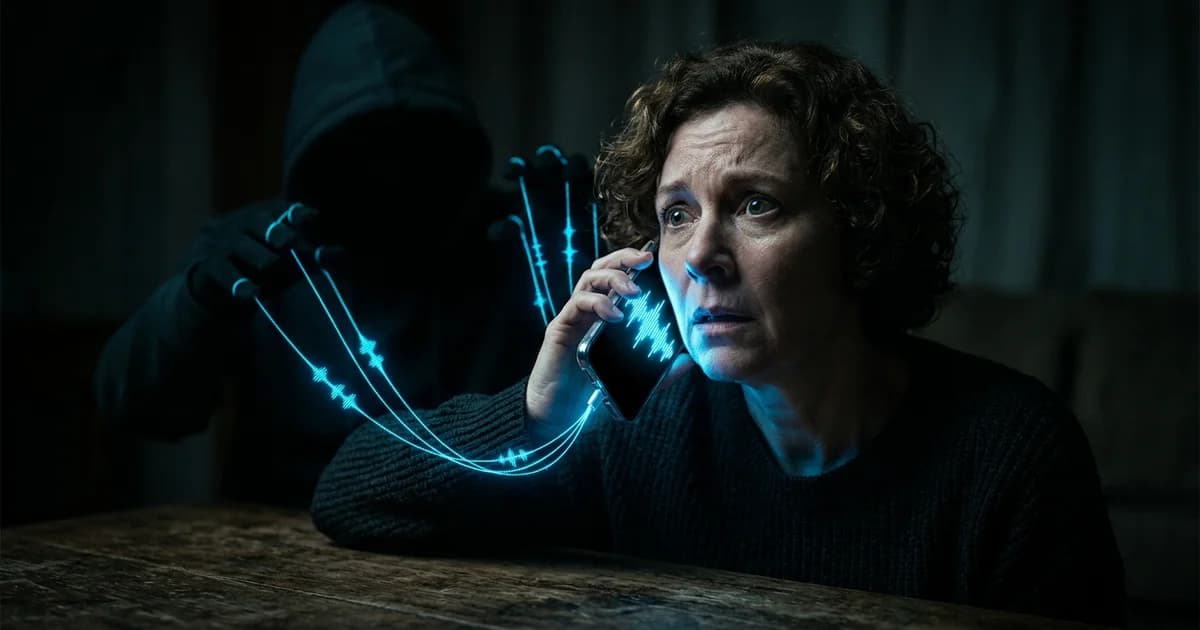
The call sounds exactly like your mother. Same inflection when she says your name, same slight pause before asking for help. She tells you she's been in an accident, needs money wired immediately. Your hands shake as you reach for your banking app. What you don't know: the voice on the other end was generated by an AI that sampled three seconds of audio from her Facebook video.
This is not a hypothetical. One in four American adults have already encountered an AI voice scam, and 77% of confirmed victims reported a financial loss. The Deloitte Center for Financial Services projects that generative AI fraud in the U.S. alone will hit $40 billion by 2027. The technology that makes it possible costs less than a cup of coffee.
3 seconds of audio is all it takes
Tools like Microsoft's VALL-E 2 and OpenAI's Voice Engine have demonstrated that a convincingly human voice clone can be generated from as little as three seconds of reference audio. According to Siwei Lyu, a computer scientist at the University at Buffalo, voice cloning has now crossed the "indistinguishable threshold," producing clones with natural intonation, rhythm, emphasis, emotion, and even breathing patterns.
That three-second sample can come from a voicemail greeting, a TikTok clip, a conference call recording, or any public audio. The scammer doesn't need your password or your bank details. They need your voice, and most of us hand it over daily without thinking twice.
The $5 deepfake factory
The underground economy powering these scams has exploded. Cybersecurity firm DeepStrike estimates online deepfakes surged from roughly 500,000 in 2023 to 8 million by 2025, a growth rate approaching 900%. Deepfake-as-a-Service platforms now sell voice cloning to anyone willing to pay, no technical skills required.
The cost barrier has essentially vanished. One documented case showed a presidential deepfake robocall cost $1 to create and took less than 20 minutes. Major retailers report receiving over 1,000 AI-generated scam calls per day. The UNODC confirmed that criminal networks are now weaponizing AI voice cloning at industrial scale, particularly through scam operations in Southeast Asia that cost U.S. victims $10 billion in 2024 alone.
What separates this from previous fraud waves: the barrier to entry dropped to nearly zero while quality became nearly perfect. Even detection tools struggle. Researchers at Monash University found that AI detection systems lose 45-50% of their accuracy outside controlled lab conditions.
How to spot a cloned voice (before it costs you)
Cloned voices carry subtle signatures that, once you know them, become difficult to unhear.
Listen for the metronome quality. Real human speech is messy. We stammer, speed up when excited, slow down mid-thought. AI-generated voices maintain unnaturally consistent pacing. If the caller sounds too smooth, too rhythmically perfect, that is a red flag.
Check the background audio. A suspiciously clean call can signal trouble. Real phone calls carry environmental noise, room echo, microphone artifacts. Scammers have started adding fake background noise, but it often sounds layered on top rather than naturally embedded.
Deploy a verification protocol. Establish a family code word, a phrase only your real family members know, that must be spoken during any urgent financial request. If someone claiming to be your relative cannot provide it, hang up immediately. Then call them back on a number you already have saved.
These techniques work because current voice cloning, despite crossing the indistinguishable threshold, still struggles with spontaneous conversational dynamics. Ask the caller an unexpected question. Force the conversation off-script. Companies face the same vulnerability: 80% have no defense against deepfake voice fraud, and existing deepfake detection tools perform far worse in real conditions than their lab benchmarks suggest. The broader threat extends beyond voice: AI-powered attacks now outpace security teams by minutes.
The verification gap nobody discusses
The deeper problem is structural. Our entire phone-based trust system was designed for an era when mimicking someone's voice required a skilled impersonator. That assumption is now obsolete. Banks still use voice verification. Customer service lines still trust callers who "sound right." Emergency contacts still wire money based on a phone call.
Until institutions rebuild verification from the ground up, the only reliable defense is yours. Today, before you forget: pick a code word with your family. Make it something absurd and unguessable. The next time a panicked voice calls asking for money, you will have the one thing no AI can fake: a shared secret.
Related Reading:
Sources and References
- DeepStrike Cybersecurity — Online deepfakes surged from 500,000 in 2023 to 8 million by 2025 (900% growth). 1 in 4 American adults have encountered an AI voice scam, with 77% of confirmed victims reporting financial loss.
- Fortune / University at Buffalo — Voice cloning crossed the indistinguishable threshold per computer scientist Siwei Lyu. Seconds of audio suffice to generate clones with natural intonation, rhythm, emphasis, emotion, and breathing.
- Monash University / Sensors journal (PubMed-indexed) — AI deepfake detection tools lose 45-50% accuracy outside controlled lab conditions. Human detection of deepfake audio at 73% accuracy.
- UNODC / United Nations — Criminal networks weaponizing AI voice cloning at industrial scale. U.S. victims lost $10 billion in 2024 to scam operations in Southeast Asia.
Read about our editorial standards →