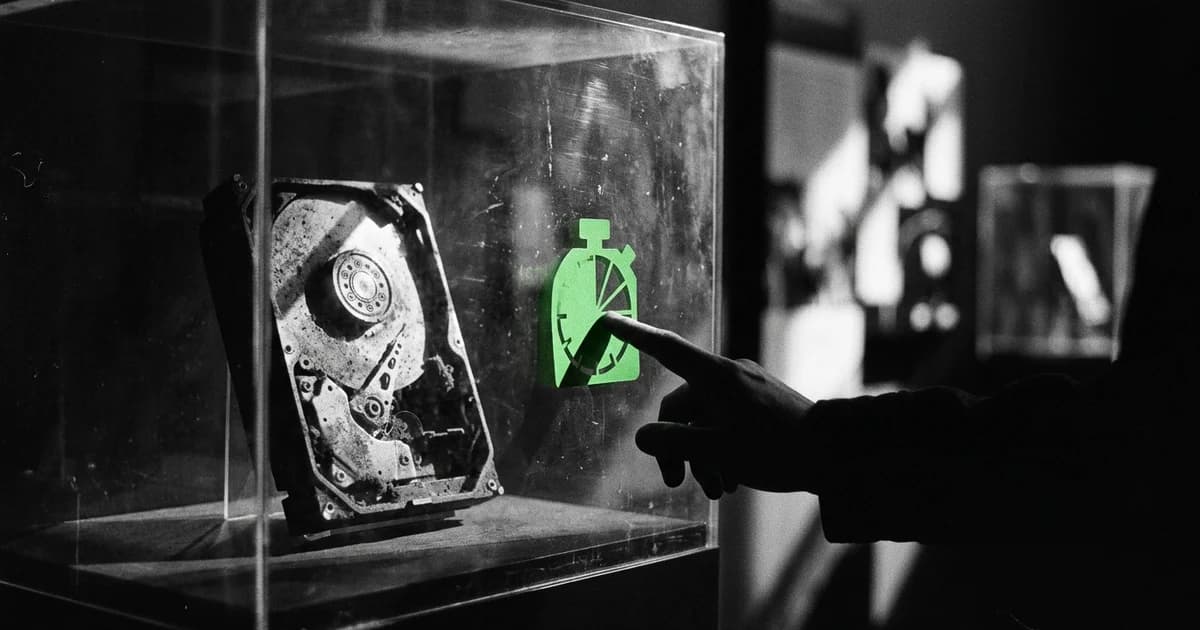
Your Archived Data Is Already a Quantum Target

The concept of migrating to quantum-safe cryptography often feels like a distant, academic exercise. It's a problem for 'later,' relegated to the bottom of priority lists alongside other futuristic threats. This perception, however, is dangerously flawed. The real risk isn't about a quantum computer decrypting your data tomorrow; it's about an adversary stealing your encrypted data today and patiently waiting to decrypt it years later. This 'harvest now, decrypt later' attack strategy transforms a theoretical future threat into a concrete, immediate vulnerability for any long-life data.
Why this matters now
As NIST warns, the very nature of this attack makes today's encrypted archives a current migration problem. Sensitive information with a long shelf life: corporate intellectual property, medical records, legal documents, or government communications: protected by today's standard algorithms like RSA or ECC is already a target. An adversary can exfiltrate this data now, store it securely, and decrypt it when a sufficiently powerful quantum computer becomes available, potentially years or even decades in the future. The encryption you trust today becomes a time-locked gift to a future attacker.
The urgency is underscored by the development of new standards. ISC2's May 2026 explainer directly connects this risk to the new NIST Post-Quantum Cryptography (PQC) standards: FIPS 203, 204, and 205. These are not speculative blueprints; they are the concrete tools being finalized to replace the vulnerable algorithms we currently rely on. The migration path is being laid now. Waiting for a public announcement of a cryptographically-relevant quantum computer is like waiting for a burglar to announce they've stolen your key before you change the locks.
This shift requires a fundamental change in mindset. Security planning must move from reactive to proactive, considering the lifespan of the data itself rather than the immediate capability of an attacker. A 2026 arXiv paper on the practical feasibility of these attacks argues for a defense-in-depth approach beyond simply waiting for a quantum 'deadline.' The paper suggests that the harvest phase is already underway for high-value targets, making the eventual decrypt phase a near-certainty. Proactive migration is the only defense.
What changes in practice
For small businesses, this might seem like an overwhelming, enterprise-level concern. But the principle scales down. Consider the data you archive: customer transaction histories, employee records, proprietary business processes. If this data has value beyond a few years, it falls into the 'harvest now, decrypt later' risk category. The migration process doesn't need to be a single, monumental project. It can be integrated into routine data lifecycle management. Start by inventorying your long-term data stores. Prioritize migration for the most sensitive, enduring archives. Implement new PQC standards for new data as they become available in your software and hardware.
The challenge is often one of visibility. Unlike a flashy AI security panic, which dominates headlines, the slow bleed of archived data encryption is a silent, boring breach in progress. It lacks the immediate drama of a ransomware attack but carries a similar, deferred destructive potential. Similarly, while new technologies like AI agents introduce novel supply-chain risks, they also generate and process data that may need long-term protection, further expanding the archive of vulnerable information.
Concretely, what does migration look like? It involves working with your IT providers, cloud vendors, and software developers to understand their PQC implementation roadmap. It means updating protocols for data at rest and in transit. It requires auditing encryption libraries and ensuring new systems are designed with quantum-safe algorithms from the start. The NIST standards provide the mathematical foundation; the industry is now building the tools.
The boring truth is that quantum-safe migration is an exercise in digital hygiene for the long term. It's about recognizing that the cryptographic walls protecting your most valuable archives have a known, eventual expiration date. Attackers are already noting what's behind those walls. The work to rebuild them with quantum-resistant materials isn't a futuristic project; it's a present-day necessity for any data meant to stay secret for more than a few years. The clock on the 'decrypt later' phase started ticking when the data was created.
Sources and References
- NIST — NIST warns that “harvest now, decrypt later” attacks make today’s encrypted long-life data a current migration problem.
- ISC2 — ISC2’s May 2026 explainer connects harvest-now, decrypt-later risk to the NIST PQC standards FIPS 203, 204, and 205.
- arXiv — A 2026 paper on the practical feasibility of harvest-now, decrypt-later attacks argues for defense-in-depth beyond simply waiting for a quantum deadline.
Read about our editorial standards →