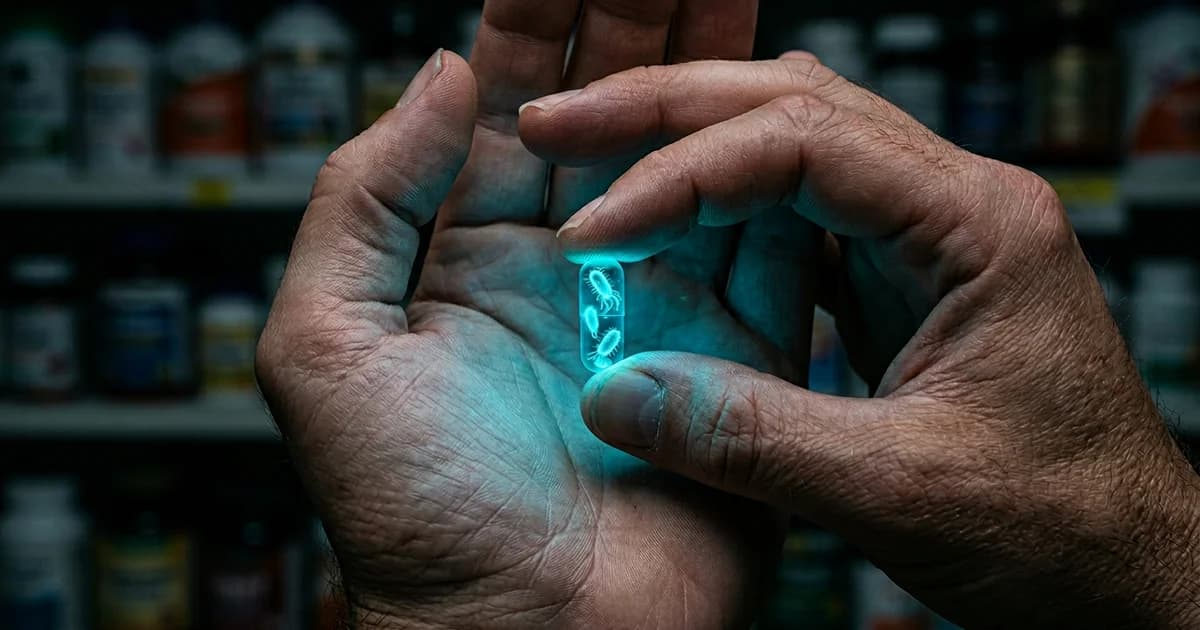
Your probiotic targets the wrong strains: 3 that actually reach your brain

⚠️ Informational content — does not constitute medical advice.
Ninety percent of the serotonin in your body is not in your brain. It is manufactured by specialized enterochromaffin cells lining your gut, responding to signals from trillions of bacteria living in your intestines. This is not fringe science. It is one of the most replicated findings in modern gastroenterology, and it means the chemistry driving your mood, sleep, and focus is being assembled far below your skull.
Yet the global probiotic supplement industry, valued at over $113 billion in 2025, sells the same handful of generic Lactobacillus and Bifidobacterium strains in nearly every capsule on every shelf. Most of these strains were selected for dairy fermentation or general digestive comfort, not for any demonstrated ability to influence brain chemistry. The disconnect is staggering: consumers spend billions on psychobiotics that were never designed to reach the organ they are supposedly targeting.
Why most probiotic strains never talk to your brain
Here is the core problem. For a probiotic to influence your mood, it needs to do three things: survive stomach acid, colonize the intestinal lining, and produce metabolites that either cross the blood-brain barrier or activate the gut bacteria and the vagus nerve (the communication highway between your gut and brain). Most commercial strains fail at step one. The ones that survive rarely accomplish step three.
Researchers at the University of Tubingen put this to the test. In a randomized, double-blind trial of 40 healthy adults, they measured brain activity using magnetoencephalography before and after four weeks of supplementation. The placebo group showed zero change. But the group taking a specific psychobiotic strain showed increased theta band power in frontal and cingulate brain regions (P < 0.05), and the neural changes correlated with improved vitality scores (r = 0.61, P = 0.007). The strain was Bifidobacterium longum 1714, and it is not in your average probiotic bottle.
The 3 strains with actual brain evidence
Not all probiotics are created equal. A small group of strains, called psychobiotics, have peer-reviewed clinical evidence showing measurable effects on mood, cognition, or sleep. Three stand out.
Bifidobacterium longum 1714 altered neural oscillations during social stress in the Tubingen trial, increasing alpha and theta activity in brain regions associated with emotional regulation. A separate 2024 study in Scientific Reports found it significantly improved sleep quality scores and reduced daytime dysfunction after just four weeks.
Lactobacillus plantarum PS128 was tested at National Yang Ming Chiao Tung University in Taiwan on self-reported insomniacs. After 30 days, the PS128 group showed significant decreases in depression scores on the Beck Depression Inventory (p < 0.05), fewer awakenings during deep sleep, and measurable shifts in brainwave patterns toward relaxation. This is the same strain that how food rewires your brain chemistry researchers have connected to serotonin signaling in animal models.
Lactobacillus rhamnosus JB-1 reduced stress-related behavior in preclinical studies by modulating the GABAergic system through vagus nerve signaling. The caveat: a subsequent human clinical trial in healthy volunteers did not replicate the same magnitude of effect, which is exactly the kind of nuance the supplement industry buries. It works through a specific mechanism (vagus nerve activation), and the effect may depend on your baseline stress level rather than being universal.
What the probiotic industry does not want you to calculate
The math is uncomfortable. A 2025 review in Precision Psychobiotics found that probiotics do not normally enter the bloodstream in healthy individuals, facing both the gut epithelial barrier and the blood-brain barrier. Effects operate through remote signaling, primarily via metabolites and vagus nerve activation, not by bacteria physically entering your brain. This means the delivery mechanism matters as much as the strain itself, something most supplements that cannot reach their target share in common.
The industry also obscures a critical finding: psychobiotic effects are strain-specific AND dose-specific. Lactobacillus plantarum from your yogurt is not the same as Lactobacillus plantarum PS128 from the Taiwan trial. Strain identity at the subspecies level determines whether a probiotic can produce the short-chain fatty acids (like butyrate) that enhance serotonin transporter expression in your gut lining, or whether it simply passes through doing nothing.
What actually works (and what to check before you buy)
Before reaching for the next gut-brain supplement, verify three things on the label. First, the strain designation must include a specific code (like 1714 or PS128), not just a species name. Second, the colony count should match the dose used in clinical trials, typically 1 billion CFU or higher. Third, check whether any published human trial, not just animal studies, supports that exact strain for the outcome you care about, whether it is mood, sleep, or stress. Most products fail this third check entirely.
The reality is that your gut manufactures most of your serotonin regardless of supplementation. The question is whether you are feeding the bacteria that optimize that process, or paying for hidden side effects of popular health products dressed in a wellness label. Three strains have earned the evidence. Everything else is marketing with a probiotic alibi.
Related Reading:
Sources and References
- PMC Serotonin Review — 90%25 serotonin in GI tract
- University of Tubingen — B longum 1714 theta power P<0.05
- National Yang Ming Chiao Tung University — PS128 decreased BDI-II p<0.05
- Precision Psychobiotics Review — Probiotics use remote signaling
- Scientific Reports — B longum 1714 improved sleep
Read about our editorial standards →