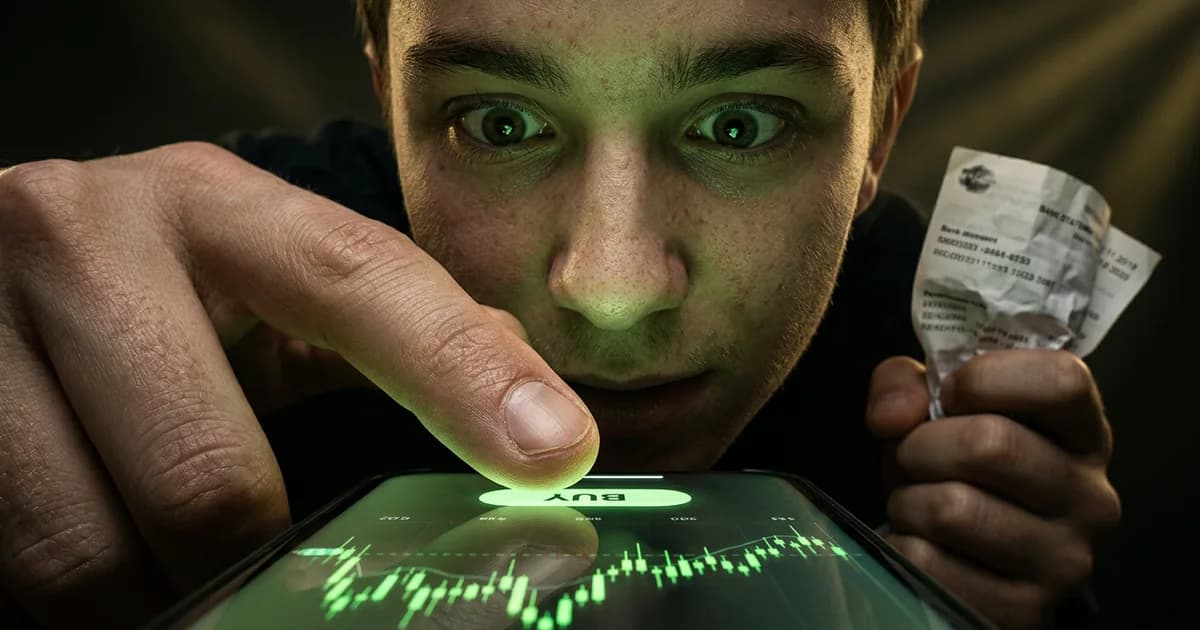
71% of TikTok financial advice is misleading, and Gen Z keeps following it

Seventy-one percent of the financial advice Gen Z consumes on social media is misleading. That is not an opinion from a concerned parent. It is the conclusion of a Social Capital Markets analysis of 2,470 TikTok, YouTube, and Instagram videos, and TikTok emerged as the worst offender: 91% of its finance videos lack disclaimers, 70% push specific stock picks without context, and 65% imply guaranteed returns.
The cost is no longer abstract. The FTC reported that Americans lost $6.1 billion to investment fraud through Q3 2025, with social media as the contact method nearly 40% of the time for people aged 20 to 29. For the youngest adults (18 to 19), that figure climbs to 47%.
The trust paradox bleeding wallets dry
Here is where the cognitive dissonance gets expensive. A MarketWatch Guides survey found that 52% of Gen Z trust social media for financial guidance. A Charles Schwab survey found 53% say finfluencers significantly influence their investment decisions, and 60% prefer online communities over established professionals.
They know the advice is unreliable. They follow it anyway. The gap between awareness and action is where the money disappears, a pattern behavioral economists call the "knowledge-behavior gap." As explored here before, financial literacy alone explains almost nothing about actual money behavior. Knowing that finfluencer stock picks are risky does not override the dopamine hit of watching someone your age flash a portfolio screenshot with five-figure gains.
Only 13% of finfluencers have financial credentials
The CFA Institute analyzed 110 pieces of finfluencer content across TikTok, Instagram, and YouTube and found only 20% of posts with investment recommendations included any disclosure. The Social Capital Markets study puts qualifications even lower: just 13% had relevant credentials.
A 22-year-old with a ring light and a Robinhood screenshot can reach 4 million followers, while a certified financial planner struggles to break 10,000. The algorithm rewards confidence, not competence.
Germany’s financial regulator BaFin found that 37% of young investors did not even know finfluencers receive payment for promoting specific products. What looks like authentic enthusiasm is often an unlabeled advertisement.
Why enforcement cannot keep up
The SEC charged Kim Kardashian $1.26 million for promoting EthereumMax without disclosing her $250,000 fee. FINRA fined M1 Finance $850,000 for failing to supervise paid influencers. But these cases target the edges, not the core.
Finfluencers in the US face no licensing requirements, no fiduciary obligations, and minimal legal risk if their advice causes losses. The FTC can now impose fines exceeding $53,000 per undisclosed endorsement, but enforcement remains reactive. A licensed advisor faces years of education and ongoing compliance; a TikTok finfluencer faces none of those barriers and can reach more people in one video than most advisors reach in a career.
The biases that keep Gen Z clicking
The persistence of finfluencer trust despite known risks is not stupidity. Several cognitive biases exploit the same vulnerabilities that cost investors $42,000 per decade.
Recency bias makes a finfluencer’s latest winning trade feel more relevant than a decade of market data. Authority bias makes confident delivery on camera feel as credible as a CFA charter. Social proof turns 2 million views into implicit validation. And loss aversion keeps you subscribed once a recommendation has gone up: you are no longer evaluating objectively, you are protecting a sunk cost.
What actually protects your money
The fix is not deleting TikTok. It is building a filter between entertainment and financial decisions.
Check credentials first. The SEC’s Investment Adviser Public Disclosure database lets you verify whether someone is registered. If they are not listed, treat their content as entertainment, not guidance.
Apply the disclosure test. If a video does not state how the creator earns money, assume a financial relationship you cannot see. The CFA Institute found fewer than half of promotional posts disclosed compensation, dropping to 20% for actual investment recommendations.
Diversify your information sources. The same generation that instinctively avoids getting all its news from one outlet still gets all its financial advice from one algorithm. That inconsistency has a price, and in 2025, the bill runs into the billions.
Related Reading:
Sources and References
- Social Capital Markets — 71% of financial advice consumed by Gen Z on social media is misleading. TikTok is the worst: 91% of videos lack disclaimers, 70% push stock picks without context, only 13% of finfluencers have relevant credentials.
- CFA Institute — Only 20% of finfluencer content containing investment recommendations included any form of disclosure about qualifications, compensation, or conflicts of interest.
- MarketWatch Guides — 52% of Gen Z trust social media for financial guidance, with 16% reporting they completely trust it. Survey of 1,000 Americans.
- BaFin / Penningtons Manches Cooper — 37% of young investors were unaware finfluencers receive payment for promoting specific products. 80% of young adults turn to social media for financial advice.
- SEC / FINRA / FTC — Kim Kardashian paid $1.26M for undisclosed EthereumMax promotion. FINRA fined M1 Finance $850K. FTC fines exceed $53,000 per undisclosed endorsement violation.
Read about our editorial standards →