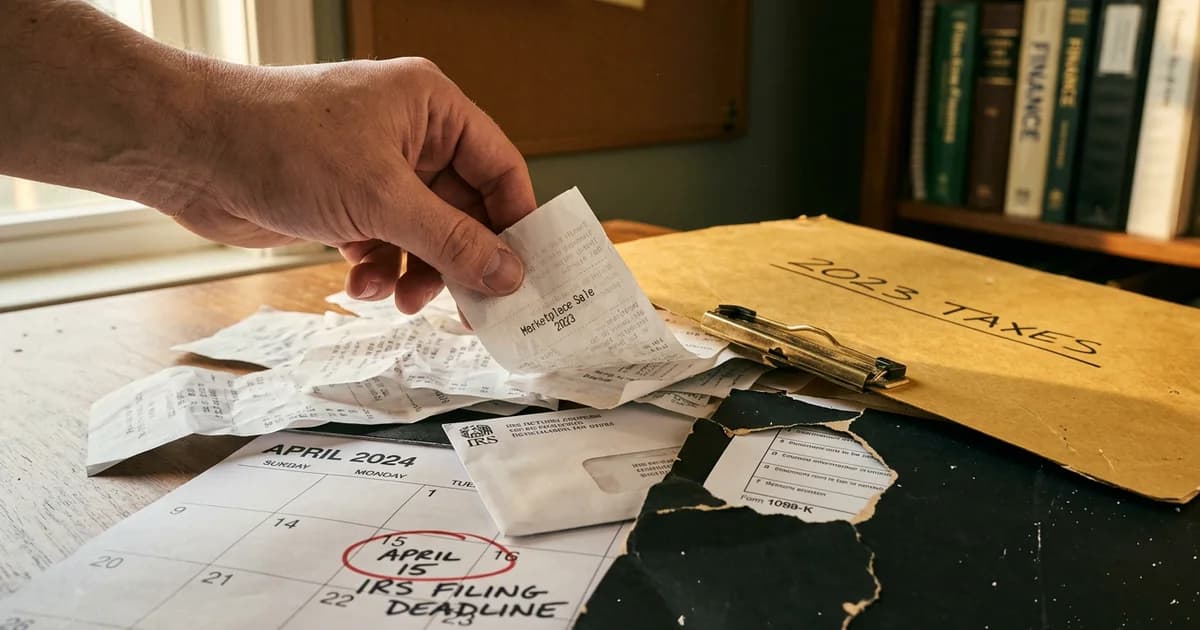
No 1099-K does not mean no tax: the IRS trap

A missing 1099-K can feel like a green light. For a side hustle, that may be the most expensive misunderstanding in the room.
The 1099-K threshold reset matters because the federal rule for third-party settlement organizations is back to over $20,000 and more than 200 transactions. The IRS says that threshold applies to TPSO reporting, while payment card transactions do not have the same de minimis threshold in its Form 1099-K general FAQ. That sounds like relief. It is not a tax holiday.
The deeper rule is less viral and more dangerous: taxable business income does not become invisible just because a platform did not send a form.
This article is general information, not personalized tax advice. Side-hustle sellers, freelancers, creators, and marketplace merchants should work with a qualified tax professional for their own filing situation.
The 1099-K threshold is a reporting rule, not an income rule
A 1099-K is a payment report. It tells the IRS and the taxpayer that a payment processor or marketplace reported gross payment activity. It does not decide whether the money is taxable, whether an expense is deductible, or whether an activity is a hobby or a business.
That distinction is where many platform workers get hurt. The form is a signal from a third party; it is not the starting gun for taxability. The IRS says taxpayers must report income from selling goods or services whether or not they receive a Form 1099-K in its guide to understanding your 1099-K.
If you use PayPal, Venmo, Etsy, Stripe, eBay, or another platform for business payments, the question is not simply, "Did I get a form?" The better question is, "What income did I actually earn, and what records support it?"
Why the reset creates false confidence
The old viral narrative was simple: lower 1099-K thresholds would flood casual sellers with forms. The reset flipped the anxiety. Now the tempting belief is that no form means no tax problem.
But reporting thresholds are built for platforms, not for your final return. A platform may have no federal obligation to issue a 1099-K for TPSO activity if you are below both over $20,000 and more than 200 transactions. Your own obligation to report business income can still exist.
The gap is especially risky for small sellers because the 1099-K reports gross payments, not profit. It may include shipping, refunds, fees, or personal reimbursements that need context. If a form arrives, it may need reconciliation. If no form arrives, your records still matter.
The trap hits side hustles first
Side hustles often begin before the owner thinks like a business. One client pays through Venmo. A marketplace sale goes through a platform. A weekend service becomes monthly income. The activity crosses from occasional to recurring before the record system catches up.
This is the same administrative blind spot that makes small-business tax choices look deceptively easy. A form can save money in one context and cost money in another, as the self-employment tax tradeoff in The 8-minute form that saves solo founders $14,200 a year shows.
For gig workers, the paperwork layer also intersects with contract status, platform rules, and state-level obligations. The federal 1099-K threshold does not settle whether a worker is classified correctly, whether expenses are documented, or whether a contract creates a separate risk. That is why pieces like Why freelance non-competes fail in 38 states, yet 71% still sign belong in the same mental folder: paperwork shapes leverage.
What to do instead of waiting for the form
The safer habit is to treat the platform as a backup record, not the record. Keep a simple ledger of business income, refunds, fees, shipping, cost of goods sold, and major expenses. Separate personal transfers from business payments as early as possible.
The practical test is simple. If a payment was for goods or services, capture the date, amount, platform, buyer or client context, and related expense support while the transaction still makes sense. The work takes minutes when current and becomes archaeology at filing time.
The reset did not erase side-hustle income. It only changed when some platforms must send a federal report. The form is useful when it arrives. Your records matter either way.
Related Reading:
Sources and References
- Internal Revenue Service — IRS FAQ says the federal TPSO threshold is over $20,000 and more than 200 transactions, while payment card payments have no de minimis threshold.
- Internal Revenue Service — IRS guidance says taxpayers must report income from selling goods or services whether or not they receive a Form 1099-K.
Read about our editorial standards →