78% of retail investors lose money, and it starts with just 6 minutes of research

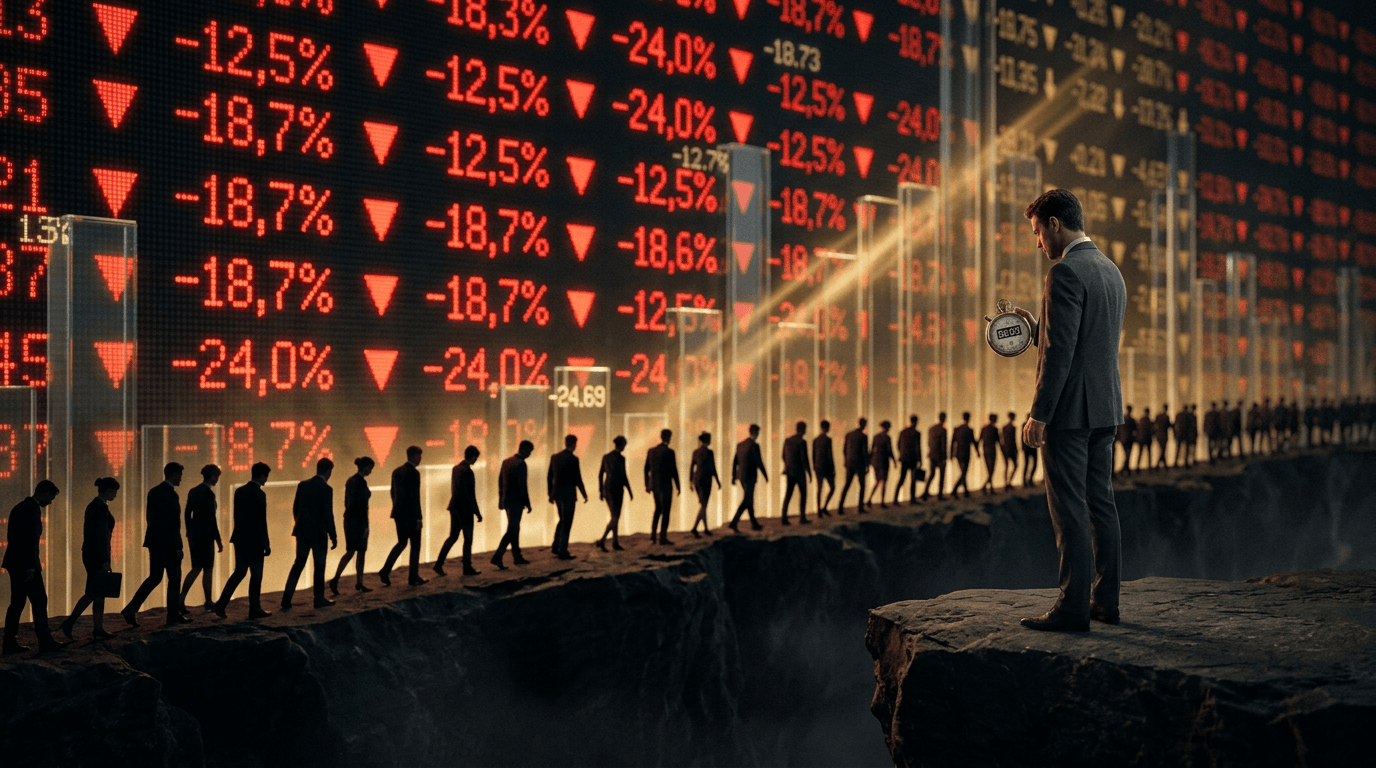
Six minutes. That is the median time an individual investor spends researching a stock before clicking "buy," according to a 2025 NBER study by Toomas Laarits and Jeffrey Wurgler. Not six hours. Not six days. Six minutes, mostly spent glancing at price charts, not earnings reports, not balance sheets, not risk metrics.
And the result? Across 28 major brokers tracked by the European Securities and Markets Authority, the median retail account loses money: 78% of them, to be precise.
The 6-minute investor is not an outlier
The NBER paper analyzed browser data from a representative sample of retail investors. The mean research time was roughly 30 minutes per trade, but the median tells the real story: half of all investors spent six minutes or less. The most-viewed information? Price charts and analyst opinions. Traditional risk statistics barely registered.
This is not laziness. It is a structural mismatch between how investing is marketed (quick, easy, democratized) and what investing actually requires (patience, literacy, discipline). When 76% of investors fear a recession but the data says they should fear themselves, the problem is not market conditions. It is preparation.
Why the crowd keeps losing together
Herding bias is the tendency to follow the investment behavior of others instead of conducting independent analysis. Social media has supercharged it. According to the FINRA Foundation's 2025 study, 29% of all investors now rely on social media for investment information. Among those under 35, 61% follow finfluencer recommendations.
The knowledge gap is staggering: the average investor correctly answered only 5.3 out of 11 basic investing questions in the FINRA survey. More than half could not correctly explain how margin trading or short-selling works. Yet these same investors are making leveraged bets based on a Reddit thread they scrolled past during lunch.
The pattern is consistent: attention-driven buying, herd-driven conviction, and loss-aversion-driven holding. Investors pile into the same stocks simultaneously (driven by the same viral posts), then refuse to sell when losses mount because admitting a mistake feels worse than absorbing the loss. It is a psychological trap with a measurable price tag.
The performance gap nobody talks about
Dalbar Inc. has tracked retail investor returns for decades. The finding that persists year after year: individual investors underperform the S&P 500 by 6.1% annually over a 20-year period. In dollar terms, that gap turns a hypothetical $100,000 into roughly $60,000 less than a simple index fund would have delivered.
Bloomberg data shows 80% of day traders quit within their first two years. Not because they get bored, but because they run out of capital. The combination of frequent trading, poor timing, and emotional decision-making creates a compounding loss engine.
Meanwhile, the cognitive biases costing investors thousands per decade are well-documented: overconfidence, recency bias, anchoring, and the disposition effect (selling winners too early, holding losers too long). Even robo-advisors can fix most biases, but they cannot fix the one that matters most: the impulse to act on crowd sentiment rather than evidence.
What six minutes should actually look like
If you are going to spend only six minutes, the research is clear about what matters most. Skip the price chart. Instead: read the company's most recent earnings summary (two minutes), check the price-to-earnings ratio against the sector average (one minute), scan for insider buying or selling activity (one minute), and ask yourself one question: "Am I buying this because I researched it, or because I saw someone else excited about it?" (two minutes of honesty).
The uncomfortable truth is not that retail investors are unintelligent. It is that the infrastructure around them (gamified apps, social media echo chambers, zero-commission trading that makes every transaction feel costless) is designed to reward speed over analysis. The six-minute median is not a personal failure. It is a system working exactly as designed, just not in the investor's favor.
Disclaimer: This article is for informational purposes only and does not constitute investment advice. Past performance data cited reflects historical trends and does not guarantee future results. Always consult a qualified financial advisor before making investment decisions.
Sources and References
- NBER (Laarits & Wurgler) — The median individual investor spends approximately six minutes on research per trade, mostly just before the trade, with price charts being their primary information source over fundamental risk data.
- ESMA (European Securities and Markets Authority) — Mandatory disclosures from 28 major brokers reveal a median 78% of retail investor accounts lose money, with rates ranging from 54% to 83% across platforms.
- FINRA Foundation — 29% of investors rely on social media for investment information, with 61% of investors under 35 following finfluencer recommendations.
- Dalbar Inc. / IO Fund — Retail investors underperform the S&P 500 by 6.1% annually over a 20-year period.
Read about our editorial standards →