Passkeys vs passwords: 98% success rate meets 94% reuse rate

You type your password. You wait. You mistype it. You wait again. You reset it. You pick a new one, the same one you use everywhere else.
Meanwhile, 19 billion passwords from the latest credential dumps are circulating freely online. Cybernews researchers analyzed them all and found that 94% are reused or duplicated across multiple accounts. Only 6% of passwords in the wild are unique.
That is not a security flaw. That is a structural collapse.
The numbers that should end the debate
Google tested roughly 100 million authentication attempts and found passkeys succeed 63.8% of the time. Passwords? Just 13.8%. That is not a marginal improvement: passkeys work nearly five times more reliably than the system most people still depend on.
Speed tells a similar story. Google's data shows passkey logins take 14.9 seconds on average, while passwords drag to 30.4 seconds. But that is Google's conservative measurement. TikTok reports users log in 17 times faster with passkeys. Amazon users sign in 6 times faster. Microsoft's passkey success rate hits 98%, compared to 32% for passwords.
If you are still typing credentials manually, you are not just slower. You are using a system that fails more than two thirds of the time.
Why passwords keep winning (for now)
The strange part is not that passkeys are better. It is that most people have not switched despite knowing passwords are broken.
Part of the reason is muscle memory. You have been typing passwords for decades. The friction feels normal. Resetting a forgotten password feels like a minor inconvenience, not a security shortcut that costs companies billions.
The other part is visibility. When 16 billion credentials leaked in early 2025 across 30 separate databases, most people never knew they were affected. The breach hit Apple, Facebook, Google, and corporate platforms simultaneously. But credential stuffing attacks happen silently: your stolen password from one site unlocks your bank account on another, and you only notice when the damage is done.
Passkeys eliminate this entire attack surface. The private key never leaves your device. There is no credential to intercept, no phishing page that can harvest anything usable, and no database of secrets waiting to be breached.
The adoption gap is closing faster than you think
Google already has 800 million accounts using passkeys, logging more than 2.5 billion passkey sign-ins. Amazon crossed 175 million passkey users within a year. Microsoft registers nearly a million new passkeys daily. Over 15 billion online accounts can now use passkeys across platforms.
CVS Health reduced mobile account takeover fraud by 98% after deploying passkeys. Mercoin, a Mercari subsidiary, has reported zero phishing incidents since implementing passkeys in 2023.
These are not pilot programs. This is infrastructure replacement happening at scale, and the companies executing it are not looking back.
What passkeys actually are (and what they are not)
A passkey is a cryptographic key pair stored on your device: your phone, laptop, or security key. When you log in, your device proves it holds the private key without ever sending it across the network. Authentication happens through biometrics (fingerprint, face scan) or a device PIN.
No shared secret. No reusable credential. No phishing vulnerability.
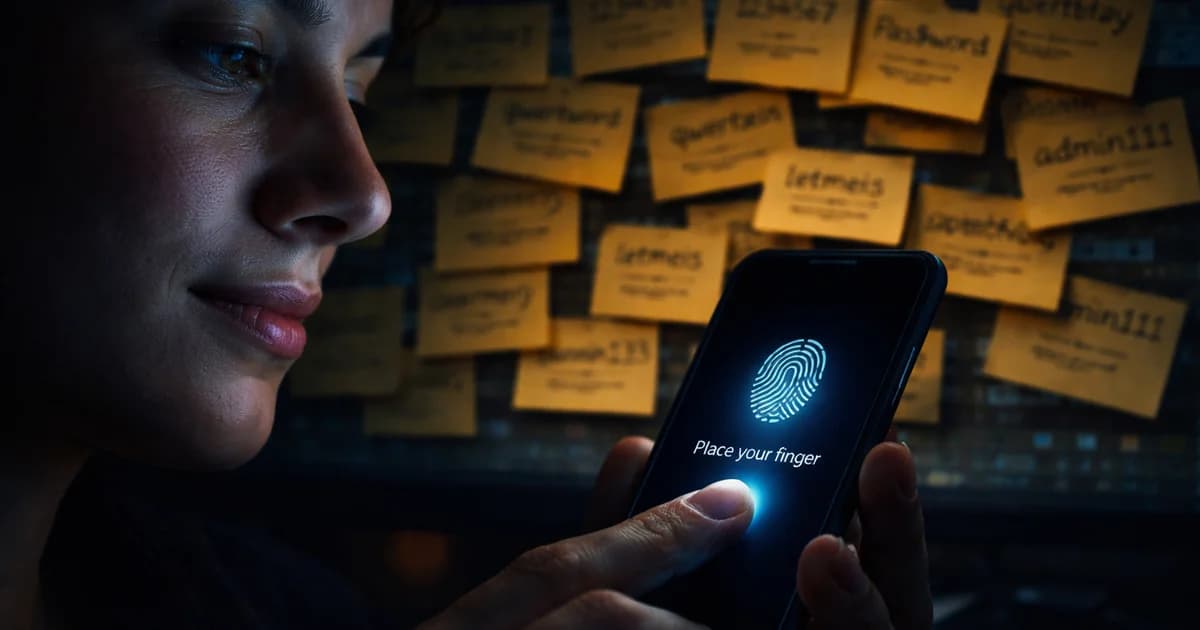
The experience is simpler than passwords, not more complex. You look at your phone, it recognizes you, and you are in. The entire process that used to involve remembering, typing, failing, and resetting now takes a single gesture.
The real cost of waiting
Every month you delay switching, your credentials sit in databases alongside billions of others. Credential stuffing attacks are running at 193 billion attempts annually. With 94% of passwords reused, the math is simple: one breach unlocks dozens of your accounts.
Setting up passkeys takes under two minutes on Google, Apple, or Microsoft accounts. Most major services, from Amazon to GitHub to PayPal, now support them.
The technology that replaces passwords is not coming. It is already here, backed by 15 billion enabled accounts and zero successful phishing attacks against passkey-protected logins. The only question left is whether you will switch before or after your reused password costs you something you cannot reset.
Sources and References
- Cybernews Research — Analysis of 19 billion leaked passwords revealed 94% are reused or duplicated across accounts, with only 6% being unique.
- Google Security Blog — Google analysis of ~100 million authentication attempts showed passkeys achieve a 63.8% success rate vs 13.8% for passwords (4x higher), and logins complete in 14.9 seconds vs 30.4 seconds.
- State of Passkeys / FIDO Alliance — TikTok users log in 17x faster with passkeys; Microsoft passkeys achieve a 98% success rate vs 32% for passwords; CVS Health reduced mobile account takeover fraud by 98%.
- Kahana / Cybersecurity Analysis — 16 billion compromised passwords were exposed in early 2025 across 30+ databases, the largest credential breach in history.
- FIDO Alliance — Passkey adoption doubled in 2024 with over 15 billion online accounts now able to use passkeys; Google reports 800 million accounts using passkeys.
Read about our editorial standards →