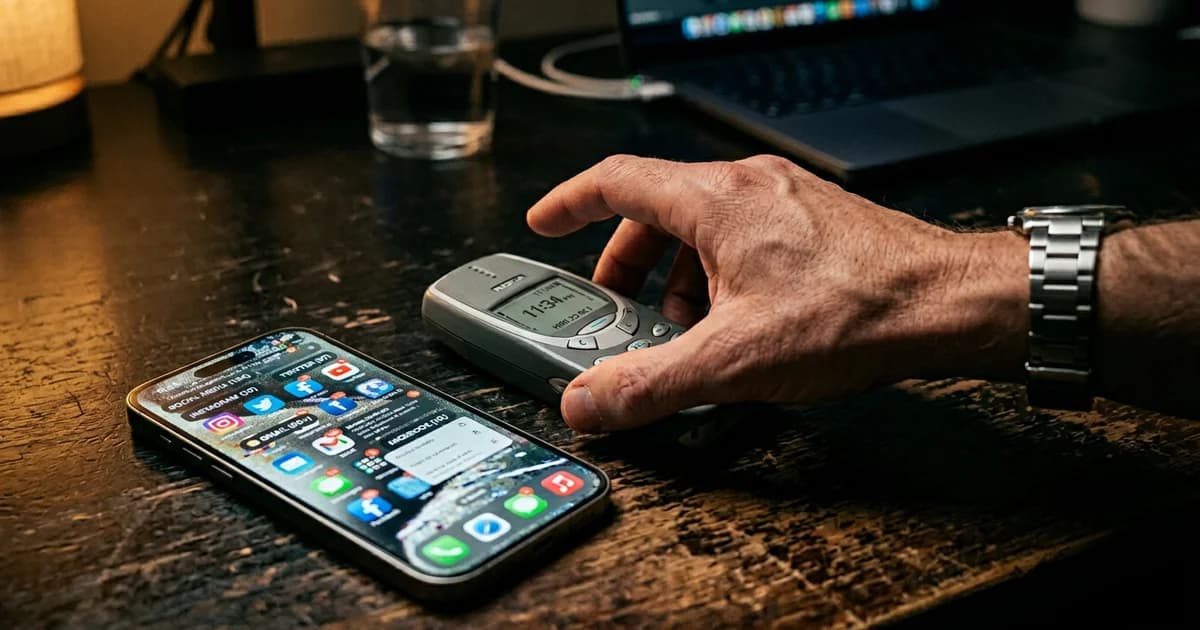
148% spike in dumb phone sales reveals Gen Z's smartphone backlash

The generation that mass-adopted Instagram, built TikTok into a cultural force, and turned screen time into a personality trait is now buying phones that can barely send a text message.
From 2021 to 2024, dumb phone sales among 18- to 24-year-olds surged 148%, while their overall smartphone usage dropped 12%. Search interest in "dumb phone" has climbed over 300% in the past 12 months. And according to a 2024 Harris Poll, more than one in five Gen Z adults now say they wish smartphones had never been invented.
This is not a niche hobby. It is a measurable behavioral shift, and the science behind it explains why it is accelerating.
Your phone is stealing focus you never agreed to lose
A 2023 study in Scientific Reports found something unsettling: just having your smartphone nearby, even turned off, reduces your ability to concentrate. Participants performed attention tests slower and less accurately when a phone was in the room. Not vibrating. Not lit up. Simply present.
The researchers at Paderborn University concluded that smartphones consume cognitive resources passively, taxing your working memory without any conscious decision to engage with the device. Your brain allocates bandwidth to the phone whether you want it to or not.
For a generation averaging over seven hours of daily screen time, that invisible drain compounds. Every notification-free moment still carries a cost if the device is within arm's reach.
Two weeks without mobile internet outperformed antidepressants
A 2025 randomized controlled trial published in PNAS Nexus tested what happens when you block mobile internet access while keeping calls and texts available. The results were striking: 91% of participants improved on at least one measure of mental health, sustained attention, or subjective well-being.
The mental health improvements were particularly notable. 71% of participants reported better psychological functioning, and the average reduction in depressive symptoms exceeded what multiple studies have documented for antidepressant medications.
Mediation analysis revealed the mechanism: without mobile internet, participants spent more time socializing face-to-face, exercising, and being outdoors. The phone was not the problem. The infinite scroll was.
The dopamine diet is not about discipline
Gen Z calls it a "dopamine diet," and the framing matters. This is not a willpower exercise or a moral stance against technology. It is a calculated trade: swap the device designed to hijack your reward circuits for one that does exactly two things well.
A dumb phone makes calls and sends texts. No algorithmic feeds. No push notifications from 47 apps. No infinite scroll engineered by teams of behavioral psychologists to maximize engagement.
A separate social media detox study tracking participants across 2024-2025 found that just one week away from social platforms reduced anxiety symptoms by 16.1%, depression by 24.8%, and insomnia by 14.5%. The speed of improvement surprised researchers: measurable gains appeared within days, not months.
The market is responding faster than the culture
The global dumb phone market exceeded 0.6 billion in 2024. Companies like Light Phone, Punkt, and Nokia are releasing premium minimalist devices priced above 00, targeting buyers who see simplicity as a feature, not a limitation.
28% of Gen Z respondents in the Harris Poll said they were actively interested in acquiring a dumb phone. That number has doubled since 2022.
This is not technophobia. These are the same people who understand algorithms better than any previous generation. They know exactly how the attention economy works because they grew up inside it. The backlash is informed, not reactionary.
What the data actually suggests you should do
The PNAS Nexus researchers did not tell participants to throw away their smartphones. They blocked mobile internet for two weeks and left calls and texts intact. That distinction matters.
You do not need a dumb phone to get the benefits. You need to break the loop between your hand and the infinite scroll. Some approaches backed by the research: disable mobile data for specific hours, move social apps off your home screen, or carry a second device for calls only.
The 148% sales spike is a signal, not a prescription. But the science underneath it is clear: the generation that built the attention economy has seen enough of how it works from the inside. They are choosing to opt out, and their mental health data says the choice is working.
Sources and References
- PNAS Nexus — Blocking mobile internet for 2 weeks improved mental health more than antidepressants; 91% improved.
- Scientific Reports (Nature) — Mere presence of smartphone reduces basal attentional performance.
- Harris Poll — 21% of Gen Z wish smartphones never invented; 28% interested in dumb phones.
- PMC / NLM — 1-week social media detox reduced anxiety 16.1%, depression 24.8%, insomnia 14.5%.
- Accio Market Research — Dumb phone sales among 18-24yo surged 148% from 2021-2024.
Read about our editorial standards →